
Measuring the Atmosphere from Inside the Moon's Shadow
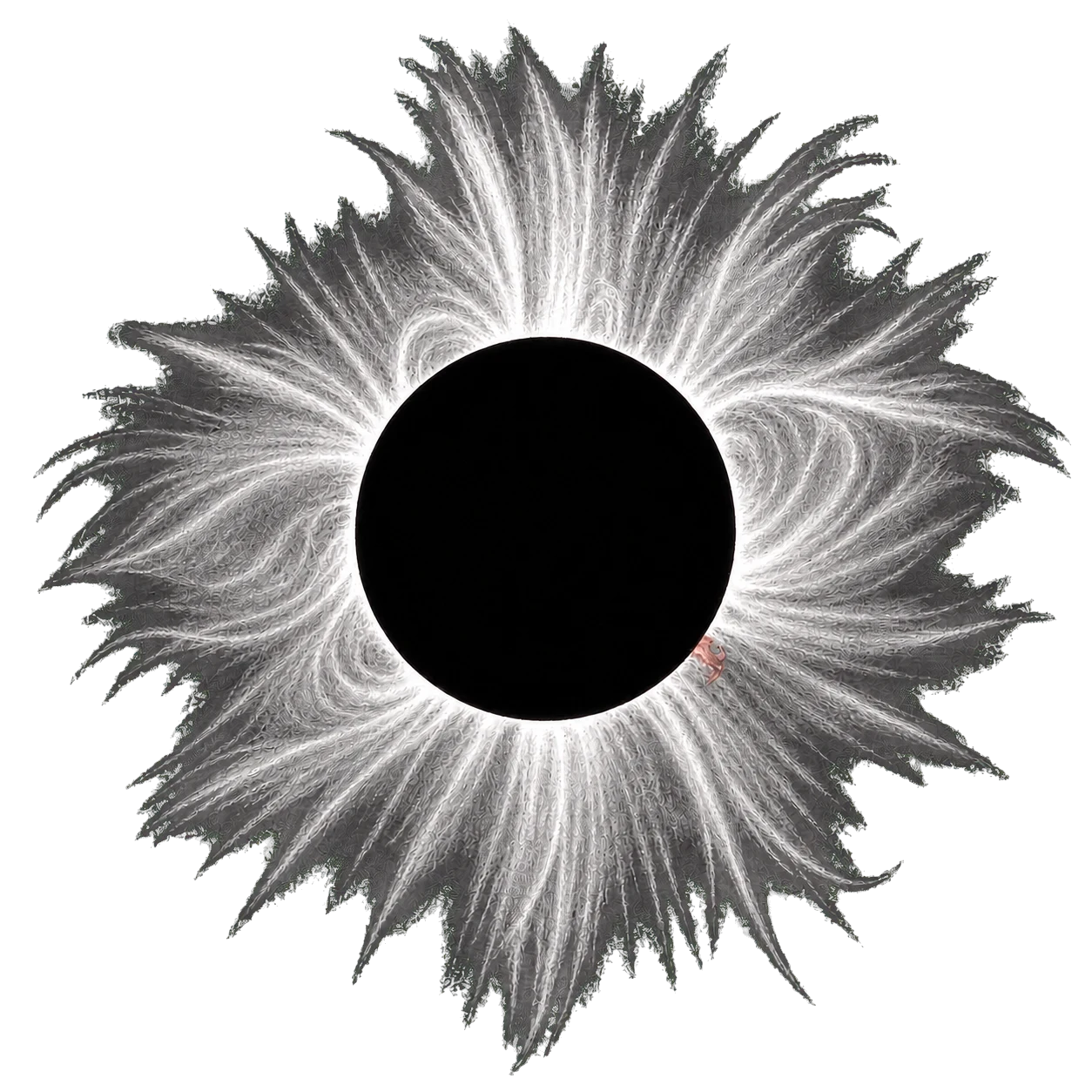
A total solar eclipse and its lunar shadow over Valencia de Don Juan turn a panorama into an experiment on the height and cooling of the atmosphere.
01 / Featured
A total solar eclipse and its lunar shadow over Valencia de Don Juan turn a panorama into an experiment on the height and cooling of the atmosphere.
02 / Recently noted
One of the most interesting aspects of the coronavirus is the time dependence of its infection rate. It determines how effective measures like quarantining can be. Spoiler: quite ineffective!
The next interesting question to ask when studying the coronavirus, is what is the effect of a mixed population which has different infection rates. That is, that some individuals are more infectious than others (e.g., a cashier in the supermarket vs. a farmer). Spoiler: it turns out that unless there are super-spreaders then all you care about is the arithmetic average of the transmission coefficient.
Armed with the data on the coronavirus such as the serial interval, incubation period, and the base growth rate, we are now in a position to start modeling the pandemic. Note that as the title suggests, these are simple models. Any conclusions drawn from this specific page should…
This is the first in a series of posts in which I study the COVID-19 (coronavirus) pandemic. My original goal was to understand the behavior of the pandemic. As a scientists my curiosity forces me to not to leave such problems untouched. I wanted to know what are the possible…
03 / Fields of inquiry
Stars, galaxies, cosmology, and the physical universe.
Mechanics, thermodynamics, and useful physical reasoning.
Climate systems, evidence, uncertainty, and interpretation.
Numerical methods, software, and practical computation.
Short observations from a scientist’s working notebook.