






 | At 2013-05-14 22:49:26, nirshaviv wrote: This is interesting. I should indeed check to see if the humidity leads the SST. My gut feeling is that the SST should be the primary affect on the humidity, but if the humidity leads the SST it could teach us something interesting (e.g., that the direct sunlight affects the evaporation, not just the SST). I'll have to think about. |
 | At 2013-05-14 15:38:40, aaron wrote: I figure it might correlate more strongly. The SH varies more and occasionally it looks like SH leads SST. The formation of clouds might cause drying of the atmosphere (perhaps creating a shorter-term signal that doesn't always make into the ocean temp) prior to the significant decrease in SW absorption. Wouldn't this decrease in evapotation be a significant amount of energy in addition to the calories you measured in ocean cooling. Plus, wouldn't lack of SW at the ocean surface decrease evaportion even more than what would happen from just a temperature change? |
 | At 2013-05-10 18:33:22, nirshaviv wrote: Well... the first impression I had when seeing the first graph is that it correlates with ENSO. Then I scrolled down and indeed saw that it does :-)
Afterwards, I saw that it correlates very nicely with the sea surface temperature. Since I know from the "ocean as a calorimeter" work that I have done (see http://www.sciencebits.com/cal... ) that the sea surface temperature has a prominent 11-year component synchronized with the solar cycle, I presume that the water content data will have the same correlation. Since the CRF varies with the solar cycle, the correlation will be with it as well. |
 | At 2013-05-10 16:09:01, aaron wrote: I'm curious to see how this data correlates with CRF. http://wattsupwiththat.com/201... |
 | At 2013-05-03 14:13:10, nirshaviv wrote: The amount of energy that the CRF delivers to the solar surface is minuscule compared with the other sources of energy. In fact, it is minuscule compared with the amount of energy reaching Earth's surface. This is one of the criticism that people have with the CRF/climate link. The secret on Earth is that although energy-wise the CRF is totally unimportant, it controls that amount of ions in the lower atmosphere. This can play an important role in some chemical processes and it affects the resistivity of the atmosphere. With the sun I don't think anything like that can happen because the gas over the solar surface anyway has a much larger ionization fraction than can be affected by the cosmic rays. So, I don't know of any process through which the cosmic rays could be affecting the sun. Since I know of one were it affects the earth (through formation of cloud condensation nuclei), my best bet is that the cosmic ray effect is directly affecting earth. |
 | At 2013-05-03 14:04:39, aaron wrote: Nir, have you considered correlation/causation issues with CRF/Solar Activity/Earth's Climate.
I'm thinking that high energy CRF may affect the sun rather than (as well as?) the sun modulating CRF. |
 | At 2013-03-06 10:50:12, Jonathan Nichols wrote: Your model projection (at about minute 35:00) did not predict major cooling for the 21st century. Yet some who follow the Solar and/or solar/GCR reasoning anticipate a new Dalton (or even Maunder) minimum from del Sol with a corresponding little ice age. In particular, SC24 is now looking pretty modest!--less than predicted even four years ago. Okay, so a couple months ago, in reply to Robin Schafer, you conclude:
"This implies that the solar influence on short time scales will simply drown under other sources of variability giving interanual variations (e.g., el Niño)."
But what of the efforts to find the source of El Nino/La Nina in the solar cycles, such as here: http://icecap.us/images/upload...
Or another Solar-Dominance voice, Abdusamatov, also an astrophysicist, predicting an immediate turn toward mini ice-age conditions. Is he looking at GCRs or just TSI?
Or if you prefer an illustration https://securecdn.disqus.com/u... |
 | At 2013-03-02 21:43:02, Polentario wrote: Hi Gustavo, I assume you completely left out that Veizer and Shaviv provided a valid explanaition of the faint young sun paradox - meaning CRT ist better to explain the billion years scale than greenhouse gasses. One has to keep in mind that the CO2 one cure fits all has some issues with the current standstill and, more important, if CRT is valid, due to the interaction with the magnetic field and the ocean currents, the interaction would me much more difficult and complex on the decadal time scale. That said, we still would have to deal with human climate interaction, but much more mitigation on the regional than on the IPCC global level. Which is btw the approach which is undertaken at the moment. One has the impression that some climate activists, the likes of Rahmstorf and Hansen, undertook character assassination efforts versus Svensmark, Shaviv and Veizer just out of fear to loos a turf, not to discuss a valid explanation. On the other side, I dont like to see the political cloud around EIKE or Heartland - I prefer the approach of Pielke and von Storch, its not about saving the world but getting a suitable mitigation effort on the local level. |
 | At 2013-02-13 13:48:18, nirshaviv wrote: Hi Gustavo,
You ask good questions, but they all have good answers. Although they deserve long proper ones, let me try to address them very briefly (to the extent that my available time permits me).
Nice lecture. However I do have some questions about it. In order for CR to have any effect, be it warming or cooling, it must have a trend. No trend, no effect on climate. I think even you agree with that,right ? Well, the problem is: There is no trend in the last 30 years. No trend in Solar magnetic field (http://www.eiscat.rl.ac.uk/Mem..., no trend in Galactic Cosmic Ray Flux on Earth (http://ulysses.sr.unh.edu/Neut... )
a. Even if the solar forcing started to decrease, it can still cause a warming if the decreased forcing is should still correspond to an equilibrium temperature which is higher than the present value (which takes a long time to equilibrate because the system behaves as a low pass filter). On the same argument, you can say that the sun is not the reason for the diurnal cycle, because if you look between say noon and 2 pm, the solar forcing is decreasing but the temperature is increasing! (or looking at the average increasing temperature between june and august and comparing to a weakening solar forcing).
b. I never said that solar forcing is the only radiative forcing. Anthropogenic warming has contributed some of the warming. The main point I try to convey is that the climate sensitivity is low, like that of a black body earth (so the anthropogenic effect is low as well).
As if it's not enough, since 1990 galactic ray flux on Earth has increased. It means that if CRT was right, it should have contributed to a cooling on Earth in the last 20 years. In fact,http://www.nasa.gov/topics/sol... "In 2009, cosmic ray intensities have increased 19% beyond anything we've seen in the past 50 years," says Richard Mewaldt of Caltech. "The increase is significant, and it could mean we need to re-think ho w much radiation shielding astronauts take with them on deep-space missions.". Also, 2009 was the 2nd hottest year on date ( http://www.nasa.gov/topics/ear... ).
see point a. above. This argument doesn't hold water in a dynamic system with a finite response time.
I find it hard to support a theory when observed facts goes against it. But let's pretend reality doesn't deny the theory and keep on playing at the theory level. Numerous peer-reviewed scientific works have proven CRT effect is neglible. Some of the studies are here:
http://www.atmos-chem-phys-dis... our analysis indicates that the variation of ionization by galactic cosmic rays over the decadal solar cycle does not entail a response in aerosol production and cloud cover via the second indirect aerosol effect that would explain observed variations in global cloud cover. We estimate that the variation in radiative forcing resulting from a response of clouds to the change in galactic cosmic ray ionization and subsequent aerosol produ ction over the decadal solar cycle is smaller than the concurrent variation of total solar irradiance.
This is a theoretical paper. The observational evidence on the other hand shows that the sun has a large effect on climate and everything points to CRs forming this link (e.g., the evidence I show in the talk). So, the fact that these authors cannot reproduce reality with a theoretical calculation doesn't mean that reality is wrong... it probably means that they either there is something wrong in their simulation, or more likely, there is a physical ingredient that is missing from the physical picture (and therefore the simulation).
http://arxiv.org/pdf/0803.2298 "we estimate that less than 23%, at the 95% confidence level, of the 11-year cycle changes in the globally averaged cloud cover observed in solar cycle 22 is due to the change in the rate of ionization from the solar modulation of cosmic rays."
I explained at length why this paper doesn't disprove anything: http://www.sciencebits.com/Slo...
http://atmos-chem-phys.net/8/7... "no statistically significant correlations were found between any of the four cloud parameters and GCR"
What these authors do not do is ask the question: Suppose the link is real, how large would we expect the cloud signal to be? (e.g., by looking at the cloud cover variations in sync with the solar cycle).
If they would, they would have realized that because they look at a small surface area, the averaging of the fluctuating weather conditions give an average signal with variations which are much larger than the signal they are looking for—they placed an upper limit on the cosmic ray–cloud cover effect, one which is several times larger than the signal expected from other correlations! In other words, they have proven nothing!
http://www.atmos-chem-phys.net... "galactic cosmic rays appear to play a minor role for atmospheric aerosol formation events, and so for the connected aerosol-climate effects as well."
First, there are experimental results, those of the sky experiment in copenhagen and those of the cloud experiment at CERN which show that atmospheric charge does increase the formation rate of condensation nuclei. So those measurements are wrong? Actually, I heard a very interesting talk by Fangqun Yu (whose publications can be found at http://www.albany.edu/~yfq/). He explained that Kumula et al's result are consistent with ion induced nucleation. Simply, Kumula looks at CN sizes which already neutralize. In fact, when he simulates ion induced nucleations with his numerical model, he recovers the above results. So, if anything, the results you mention are consistent with ion induced nucleation, not vice versa.
There are more articles, of course, but I think it's enough to show the theory is wrong.
As you can see, none of the articles you mention (or others that I have seen) can prove the the cosmic ray climate link is wrong, but I can bring many results which show the contrary, that the link appears to be working.
I assume you have already seen this articles, and, yet, still defends CRT. What such amazingly strong publ ished and peer-reviewed evidences do you have to support it, that overwhelms the flaws in the thory I exposed here ? Also, can you provide the reference for the data in the graphs you show ? I think you must agree a graph without source is unreliable. Thanks.
There are a few open questions, but certainly no flaws in the sense that there are results disproving the theory. In any case, all the graphs I present in the talk have a published source. The author + year should be on all view graphs (though I have seen that some were cut out in the video editing). If you need more information I would be happy to send you. |
 | At 2013-02-13 02:28:50, Gustavo Molina Buzz wrote: Nice lecture. However I do have some questions about it. In order for CR to have any effect, be it warming or cooling, it must have a trend. No trend, no effect on climate. I think even you agree with that,right ? Well, the problem is: There is no trend in the last 30 years. No trend in Solar magnetic field (http://www.eiscat.rl.ac.uk/Mem... ), no trend in Galactic Cosmic Ray Flux on Earth (http://ulysses.sr.unh.edu/Neut... )
As if it's not enough, since 1990 galactic ray flux on Earth has increased. It means that if CRT was right, it should have contributed to a cooling on Earth in the last 20 years. In fact,http://www.nasa.gov/topics/sol... "In 2009, cosmic ray intensities have increased 19% beyond anything we've seen in the past 50 years," says Richard Mewaldt of Caltech. "The increase is significant, and it could mean we need to re-think how much radiation shielding astronauts take with them on deep-space missions.". Also, 2009 was the 2nd hottest year on date ( http://www.nasa.gov/topics/ear... ).
I find it hard to support a theory when observed facts goes against it. But let's pretend reality doesn't deny the theory and keep on playing at the theory level. Numerous peer-reviewed scientific works have proven CRT effect is neglible. Some of the studies are here:
http://www.atmos-chem-phys-dis... our analysis indicates that the variation of ionization by galactic cosmic rays over the decadal solar cycle does not entail a response in aerosol production and cloud cover via the second indirect aerosol effect that would explain observed variations in global cloud cover. We estimate that the variation in radiative forcing resulting from a response of clouds to the change in galactic cosmic ray ionization and subsequent aerosol production over the decadal solar cycle is smaller than the concurrent variation of total solar irradiance.
http://arxiv.org/pdf/0803.2298 "we estimate that less than 23%, at the 95% confidence level, of the 11-year cycle changes in the globally averaged cloud cover observed in solar cycle 22 is due to the change in the rate of ionization from the solar modulation of cosmic rays."
http://atmos-chem-phys.net/8/7... "no statistically significant correlations were found between any of the four cloud parameters and GCR"
http://www.atmos-chem-phys.net... "galactic cosmic rays appear to play a minor role for atmospheric aerosol formation events, and so for the connected aerosol-climate effects as well."
There are more articles, of course, but I think it's enough to show the theory is wrong.
I assume you have already seen this articles, and, yet, still defends CRT. What such amazingly strong published and peer-reviewed evidences do you have to support it, that overwhelms the flaws in the thory I exposed here ? Also, can you provide the reference for the data in the graphs you show ? I think you must agree a graph without source is unreliable. Thanks. |
 | At 2013-02-03 08:41:44, nirshaviv wrote: Hi Max,
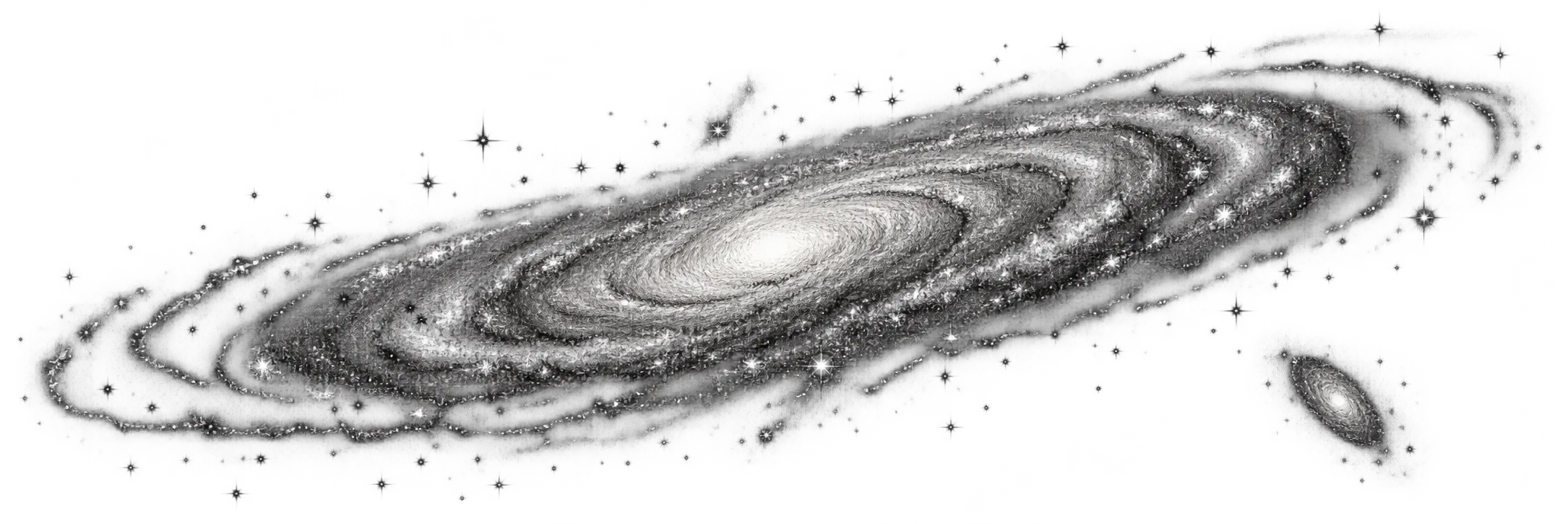
The spiral arms are density waves, that is, they describe concentration of stars which propagate at some speed, while the stars composing the waves propagate at another. I think that a picture is worth a thousand words, and a movie worth a thousand pictures (ok, I am exaggerating a bit...) but still, this movie explains it all. Think of the traffic jam as the spiral arms and the cars as the stars: http://www.youtube.com/watch?v... See also: http://en.wikipedia.org/wiki/D...
In other words, there is nothing special about the sun. It goes in and out of spiral arms just like all the other stars. The secret is that the massive stars the produce the blue light and explode as supernovae (which accelerate the cosmic rays) live a short life. Thus, they are born by the spiral arm shocking the interstellar medium, and die shortly thereafter, which is why the spiral arms look much more prominent than the interarm regions. As for the IPCC, indeed, the draft report appears to pay a little lip service to all the claims that the sun has a non-negligible effect on the climate, but they don't appear to do anything with it. |
 | At 2013-02-02 17:12:00, Max wrote: Hi, I proceeded to some related materials proposed by youtube after watching the presentation, and was surprised by the claim that the Solar system is revolves around the Milky Way galaxy NOT in sync with its arms. I suppose that most of the galaxy is within those arms and armlets and are stationary with respect to them. Is it? So, is the Solar system unique in its behavior or are there many stars that behave alike? May it mean that our star was not originated in our galaxy but was captured by its gravity from elsewhere? Also, the repeating temperature changes due to our changing location may suggest a (probably new) research lead for development of life itself. Is this theory of rotation around the galaxy arms widely acceptable? Are there alternative views? And to a different issue, in case you did not hear about it yet: it appears that the next IPCC report is supposed to accept some solar involvement in the global temperature rise, but not taken too seriously and hidden inside. See http://www.theblaze.com/storie... |
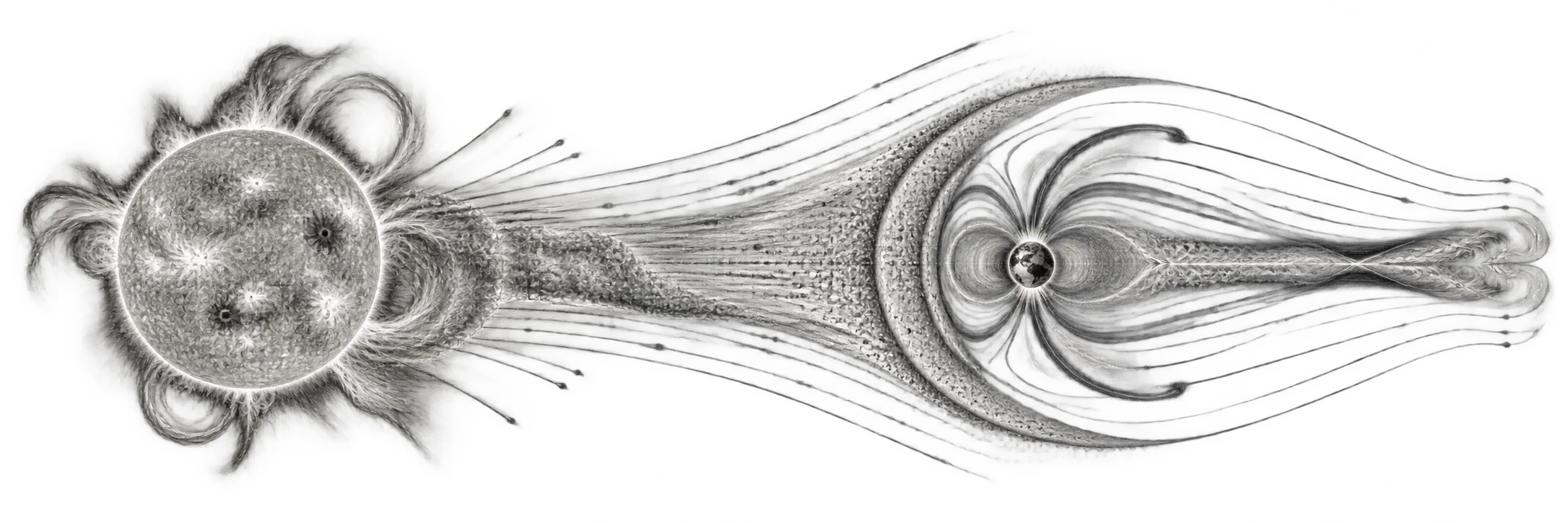
 | At 2013-01-31 22:52:30, nirshaviv wrote: One of the little appreciated facts is that we have both the atmosphere and earth's magnetic field to shield us from cosmic rays. That is, the magnetic field stops particles which are anyway mostly stopped by the atmosphere. This means that if you switch off Earth's magnetic field altogether there will be only a modest 10-20% increase in the ionization of the lower atmosphere. This will translate to something like a 1°C cooling. However, over the relevant time scales for 10s of thousands of years over which the Earth's magnetic field changes (e.g., google Laschamp event), there are anyway larger variations in Earth's climate from other reasons (e.g., Milankovich). So, I don't think Earth's magnetic field is a dominant climate driver on any time scales, only a secondary one. |
 | At 2013-01-30 10:59:02, Fortnum wrote: Hi Nir
I find the idea that low solar activity weakens the Earth's defenses against high-energy cosmic rays, resulting in cooling due to increased cloud cover most interesting. We know that the Earth undergoes periodic geomagnetic reversals which leaves the Earth without the protection of its magnetic shield for long periods allowing more intense bombardment by cosmic rays. Could the resulting increase in cloud cover have been a cause of the ices ages |
 | At 2013-01-24 14:21:10, nirshaviv wrote: Hi, a) I e-mailed you the presentation. b) i am not sure that it should have a large impact on the global weather since I am not sure how much of the surface area is covered by stations who's measuring standard was changed. c) If you redo the Ziskin & Shaviv analysis mentioned at the end but include an urban heat island corrected land temperature (e.g., as McKintyre suggested is the effect to me in private communication), then one finds that the solar contribution is roughly the same, the estimated climate sensitivity is roughly the same, but the estimated anthropogenic contribution is a little smaller (I don't remember off hand by how much). |
 | At 2013-01-22 20:47:14, Ron S. wrote: Excellent presentation. Do you by chance have it available as a downloadable .pdf file?
If you include Anthony Watts' recent discovery that application of a new European weather station standard to US stations reduces the US rate of temperature increase by a factor of 2 (making corrected NOAA/GISS numbers agree with satellites over the 33 year overlap), do you have a number for the fraction of the increase that can be accounted for by cosmic rays? It appears that only about 21% can be accounted for by anthropogenic carbon dioxide. |
 | At 2013-01-22 07:45:02, nirshaviv wrote: :-) |
 | At 2013-01-21 15:25:30, Fortnum wrote: A veritable Daniel in the lions' den. |
 | At 2013-01-19 07:30:51, nirshaviv wrote: Robin, Over short time scales, all the cosmic ray flux variations are due to changes in solar activity. You'll have to go to the multi-millennial time scale to see variations in the cosmic ray flux which have nothing to do with the Sun, in this case, from Earth's magnetic field. However, there is also only a minor contribution from the sun. Because of the large heat capacity of the climate system, the 1W/m^2 changes in the energy budget actually translates to about 0.1°C over the several year time scale and less over shorter time scales. This implies that the solar influence on short time scales will simply drown under other sources of variability giving interanual variations (e.g., el Niño). |
 | At 2013-01-18 21:55:43, Robin Schaefer wrote: Very Interesting lecture, I enjoyed it ii immensely. I am currently undertaking a Nuffield Scholarship travelling the world studying seasonal weather forecasting, and am interested in your work on solar radiation and other cosmic rays and how they affect our seasonal weather. You touched on the effect briefly in your talk. Perhaps in percentage terms how much influence do you think the other sources of cosmic radiation have on our weather relative to the sun? Do you think it is a factor that needs to be considered? I would love to talk more on this. |
 | At 2013-01-18 14:55:54, Rathnakumar wrote: Interesting talk. Thank you for sharing! |
 | At 2013-01-17 19:52:32, nirshaviv wrote: Good question. The model I discuss has only one box for the atmosphere. Therefore it cannot be used to say anything about the altitudinal dependence of the heating. However, one can expect a difference: A CO2 increase works by blocking the atmosphere from above while cloud cover decrease (from a reduced cosmic ray flux) works by allowing more heat at the bottom. Whether this can explain the radiosonde data is beyond me at this point! |
 | At 2013-01-17 19:42:18, Allan12 wrote: A very good piece of work! I have one question. As described in the video, your model produces a smaller residual when it comes to the estimation of the global temperature. Does it also give a better fit to the observations of the altitude dependent temperature (as described in "Problem 2" in the lecture)? |
 | At 2013-01-17 14:28:46, nirshaviv wrote: On one or two occasions I was attacked verbally, but not something I cannot handle ;-) |
 | At 2013-01-17 08:47:21, Chad Woodburn wrote: Very enjoyable. As a non-scientist layman (but one who tries to keep up with the issues), I found it to be completely understandable and very persuasive. I'd be interested to know, though, whether and how you may have been attacked as a result of speaking out. |